AI for Poets: Why Interdisciplinary Thinkers Matter in the Age of AI
Recently we hosted Ben Snyder, Senior Applied Scientist at Amazon Web Services, for a talk in the CSPB Speaker Series titled AI for Poets (or Poets for AI).
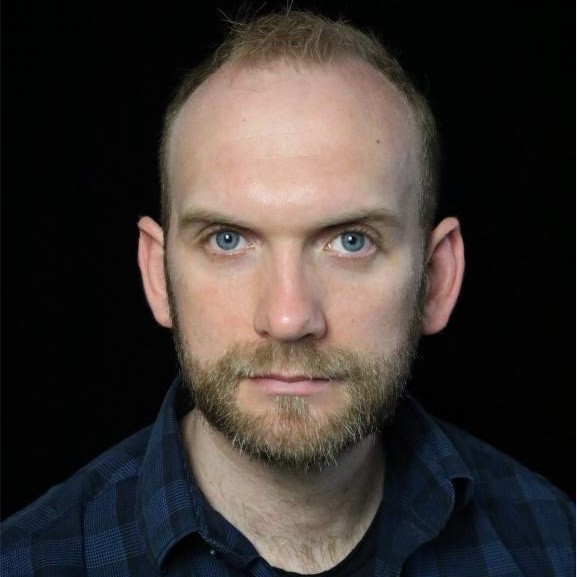
Ben’s main point was simple. As AI tools automate more routine coding work, the skills that matter begin to shift. Writing code still matters, but understanding the problem and designing the solution matter even more.
One thing that struck me during the talk is how closely this idea aligns with the structure of the CSPB program.
Every student in this program already has a degree in another field before studying computer science. That might be physics, economics, psychology, biology, journalism, music, or something else entirely. Those backgrounds are not a detour. In many cases they become the domain knowledge that makes your technical work valuable, especially in a field where AI is changing what kinds of software skills matter most.
Ben’s own path reflects that kind of trajectory. He began in sociology, later moved into statistics, and eventually completed a degree in computer engineering. Each step added another way of looking at problems.
That kind of interdisciplinary thinking is becoming more common in AI.
Modern systems often sit at the intersection of several domains. You might be building software that interacts with logistics systems, robotics, agriculture, finance, medicine, or manufacturing. Understanding the software is important. Understanding the domain is just as important.
But another point Ben made during the talk is easy to miss in all the excitement around AI tools: the technical foundations still matter.
Toward the end of the talk he was asked how he would teach introductory computer science today. His answer was telling.
“First of all, I would probably still have an incredibly annoying entry course on something like C++… basically when I learned coding they were like, go learn C++.”
His point was not nostalgia for old programming languages. It was that students still need a place where they learn how software actually works: how programs execute, how systems behave, and how to reason about code.
At the same time, he emphasized that modern developers also need to understand how to work effectively with new AI systems.
“I think we need to have courses in actually teaching people how to not only code, but how to interact with the new AI coding tools, and how to understand the relation between the two.”
A related theme that came up in discussion is how the day-to-day work of programming is already shifting. Less time is spent writing every line of code from scratch, and more time is spent evaluating outputs, refining prompts, and making design decisions. In that environment, the role of the developer becomes less about typing and more about judgment.
That shift also highlights an important limitation of current AI systems. Unlike compilers, which are deterministic and verifiable, AI-generated outputs require interpretation and validation. Even when the output looks correct, it still needs to be checked against the intended behavior of the system.
One of Ben’s most interesting comments came when he discussed how real AI systems are actually built in practice.
“Realistically, we need to know how to make traditional statistical models, machine learning, and large-scale AI work together.”
That line captures something important about modern software development. The tools may be evolving quickly, but the systems we build still rely on multiple layers of knowledge.
Understanding AI today often means understanding how several ideas fit together: statistics, machine learning, large-scale systems, and the software that connects them.
The conversation also touched on career preparation. One consistent takeaway is the importance of being able to explain a project from beginning to end. Not just what the code does, but how the idea developed, what tradeoffs were considered, and how decisions were made along the way.
Projects make that visible. They show how someone thinks. They also give candidates something concrete to talk about during interviews. This is becoming increasingly important as employers look for signals beyond resumes alone.
In other words, the “poets” in Ben’s title are not just a metaphor. Many students already bring that broader perspective to the field. And in an age where AI can generate code, that combination of technical foundations and broader perspective is becoming even more valuable.
We have posted the full (lightly edited) transcript of the talk here:
Read the talk transcript:
AI for Poets (or Poets for AI)
If you watched the talk or read the transcript, I’d be curious what stood out to you.
Related Articles
If you are thinking about how AI is changing software work and why interdisciplinary backgrounds matter, these pieces explore closely related ideas.
-
Programming After Programmers
A response to the New York Times on AI and coding, and why system design and domain knowledge may matter even more as code generation becomes easier. -
What You Learn
An overview of the core computer science ideas that still matter even as AI tools make coding faster and more accessible. -
Is This Program Right for You?
A closer look at the kinds of students who often benefit from a structured path into computer science. -
Career Change into Computer Science
Practical advice for professionals moving into software engineering, data science, or related technical work.